

- Search
 Lot I-10-7, D7 Street, Saigon Hi-Tech Park, Tang Nhon Phu Ward, Thu Duc City, HCMC
 (+84) 28 7301 3688
 Info@wembleymed.com.vn
Originally developed to enhance patient comfort and reduce errors during sample collection, vacuum blood collection tubes have since become a defining advancement in laboratory diagnostics. Over more than five decades of continuous improvement, this technology has reshaped conventional blood collection practices and contributed significantly to the global standardization of laboratory procedures.
1. The context before the introduction of Vacuum Blood Collection Tubes
Before the introduction of modern vacuum blood collection tubes, blood sampling relied heavily on manual techniques that were often complex and susceptible to error. At the time, laboratory testing was conducted through an open collection system.
During the procedure, technicians performed venipuncture using a syringe to draw blood. The sample then had to be transferred manually into separate tubes according to specific testing requirements. These tubes typically contained anticoagulants such as EDTA or citrate and were secured with rubber stoppers.

The traditional blood collection process posed significant challenges in both safety and accuracy. Manual transfer of samples increased the likelihood of spillage, raising the risk of cross-contamination and occupational exposure for healthcare professionals. Additionally, improper handling could generate pressure changes that damage blood cells (hemolysis), leading to inconsistent sample volumes and compromised test reliability.
According to guidance from the World Health Organization (WHO), pre-analytical errors remain one of the leading causes of inaccurate laboratory results. Common issues include contamination, hemolysis, and incorrect sample volume, all of which can significantly impact diagnostic outcomes.
2. The development history of Vacuum Blood Collection Tubes
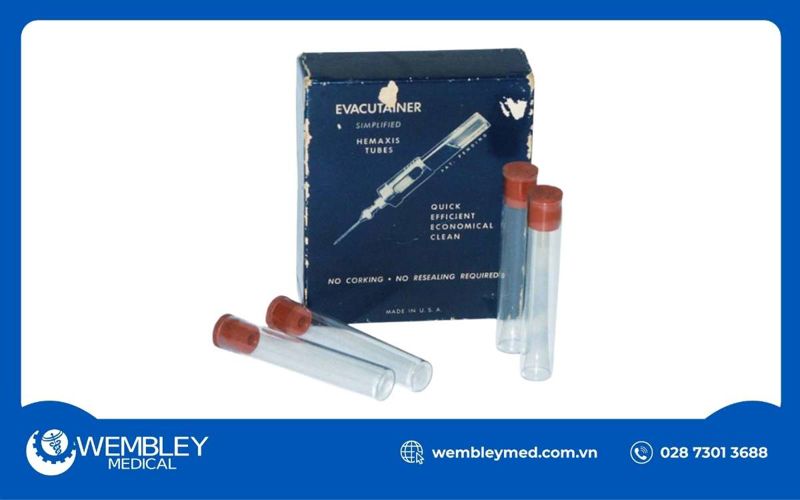
The earliest ideas of vacuum blood collection tubes emerged relatively early. During World War II, the U.S. military used evacuated glass tubes to collect and transport blood for transfusion purposes. This application laid the groundwork for a major breakthrough in the years that followed.
In the late 1940s, Joseph Kleiner witnessed his wife endure multiple painful needle sticks to obtain sufficient blood samples for various medical tests. Suffering from a serious illness, she had to go through a cumbersome and inefficient blood collection process. Blood was often spilled during transfer from the syringe to test tubes, and each type of test (such as chemistry, hematology, or coagulation) required a separate venipuncture. As a mechanical engineer, Kleiner was driven to find a better way to collect and handle blood samples.
Inspired by the vacuum glass tubes used by the military during World War II, Kleiner realized that the same principle could be applied to draw blood directly from a vein into a sealed, sterile tube. He developed a prototype of a closed system that used vacuum pressure to collect blood into sterile tubes. This system also allowed for the inclusion of additives, such as anticoagulants, preservatives, or stabilizers to prevent clotting or degradation of the sample.
In 1947, he filed a patent for his invention, and by 1949, the first vacuum blood collection tubes were commercially introduced, marking a significant milestone in the field of laboratory diagnostics.
3. The working principle of Vacuum Blood Collection Tubes
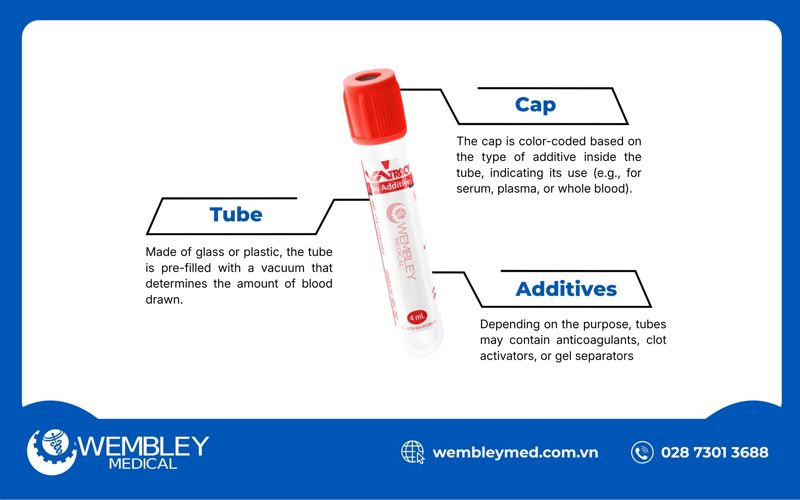
Vacuum blood collection tubes are essential tools in medical and laboratory settings for collecting blood samples efficiently and safely. These tubes are pre-evacuated, creating a vacuum that automatically draws a specific blood volume into the tube when a needle is inserted into a patient’s vein.
Key components:
Advantages:
4. The Market Development of Vacuum Blood Collection Tubes
Across global healthcare systems, vacuum blood collection tubes are increasingly establishing themselves as a standard in modern laboratory practice. Their widespread adoption across both advanced healthcare systems and emerging markets demonstrates that this is not merely a technological improvement, but a meaningful shift in the approach to diagnostics.
This trend reflects the growing demands of the global healthcare sector: standardizing procedures, improving the reliability of test results, and ensuring safety throughout the entire laboratory testing process.
North America
In North America, vacuum blood collection tubes have become the standard method in most hospitals and laboratories. This is closely linked to the high level of automation in laboratory systems and strict biosafety regulations. The region currently accounts for approximately 34 - 45% of the global market and leads in the adoption of standardized blood collection systems. With billions of tests conducted each year, vacuum tubes are virtually the default choice in modern clinical practice.
Europe
Europe has a high adoption rate of vacuum blood collection tubes, driven by widely standardized laboratory systems. The region accounts for approximately 30% of the global market, with strong demand coming from routine testing programs and an aging population.
In clinical settings, vacuum tubes are considered the standard method in many Western European countries, thanks to their ability to ensure accuracy and consistency of specimens.

Asia Pacific
The Asia - Pacific region is experiencing a rapid transition from traditional blood collection methods to vacuum tube systems. The region currently consumes approximately 950 million tubes per year and is considered the fastest-growing market globally. The expansion of healthcare systems, along with rising testing demand in highly populated countries such as China and India, is driving the standardization of blood collection practices in line with international standards.
Trung Đông & Châu Phi
In Middle East and Africa, the adoption of vacuum blood collection tubes continues to expand, although implementation varies significantly between countries. The region currently represents an estimated 4 - 9% of the global market, with growth largely influenced by healthcare infrastructure capacity, cost sensitivity, and the availability of trained personnel.
Despite these disparities, momentum toward modernized blood collection systems is clearly building, particularly in nations making sustained investments in healthcare development.
Latin America
Latin America represents around 7% of the global market and is experiencing steady growth. The expansion of disease screening programs and the upgrading of laboratory systems are driving demand for vacuum blood collection tubes. In this context, modern blood collection methods are increasingly being prioritized over traditional techniques.
5. The Current Use of Vacuum Blood Collection Tubes in Vietnam
In Vietnam, vacuum blood collection tubes have begun to be adopted within laboratory systems; however, their level of use remains relatively low compared to developed countries. According to industry reports, the current adoption rate is still below 10%, whereas in developed markets, this technology has been widely implemented since the 1980s.
Currently, many healthcare facilities in Vietnam continue to rely on traditional methods, using syringes for blood collection and manually transferring samples into tubes. This process not only depends heavily on operator technique but also carries risks of volume inconsistencies and compromised sample quality, ultimately affecting test accuracy.
Nevertheless, a clear shift is underway, particularly in central-level hospitals and large laboratories. These institutions are increasingly prioritizing vacuum tube systems to meet requirements for standardized procedures, reduce pre-analytical errors, and improve the reliability of test results. At the same time, Vietnam has introduced national standards aligned with international (ISO) guidelines for venous blood collection tubes, providing a foundation for broader adoption in the future.
Notably, in recent years, domestic manufacturers have begun investing in the production of vacuum blood collection tubes, contributing to greater localization and reducing reliance on imports. This development is expected to accelerate the transition toward modern blood collection practices across the healthcare system.


6. WEMBLEY MEDICAL’s VATRACY Vacuum Blood Collection Tubes for Modern Laboratory Practice
As a manufacturer in the medical consumables sector, WEMBLEY MEDICAL focuses on delivering solutions that combine technical excellence with real-world applicability within Vietnam’s healthcare environment.
Through continuous investment in research and localized production of Vacuum Blood Collection Tubes, the company enhances product accessibility for healthcare facilities nationwide while actively contributing to the standardization and modernization of blood collection practices.
A notable example is VATRACY Vacuum Blood Collection Tubes, developed to ensure sample stability, testing accuracy, and safety throughout the collection process. Beyond performance, the product offers a clear competitive advantage by optimizing costs for healthcare providers while maintaining quality comparable to international standards.
The entire VATRACY Vacuum Blood Collection Tubes manufacturing process is strictly controlled under internationally recognized quality and environmental management systems, including ISO 13485:2016, ISO 9001:2015, ISO 14001:2015, and GMP. The product has also obtained CE Marking and CFS (United Kingdom, Spain, and Vietnam), reinforcing its compliance with global standards and its readiness for international distribution.

Designed to support modern blood collection workflows, VATRACY Vacuum Blood Collection Tubes helps streamline procedures, reduce the risk of contamination, and enhance safety forhealthcare professionals. Its multi-sample collection capability from a single venipuncture also minimizes patient discomfort and improves the overall patient experience.
More than a product, VATRACY vacuum blood collection tubes serve as a practical foundation for standardizing blood collection practices, optimizing laboratory performance, and sustainably elevating diagnostic quality.


Reference:
https://www.marketgrowthreports.com/market-reports/vacuum-blood-collection-tube-market-104868
https://www.emergenresearch.com/industry-report/venous-vacuum-blood-collection-tube-market
https://www.credenceresearch.com/report/blood-collection-tubes-market
https://www.marketgrowthreports.com/market-reports/vacuum-blood-collection-tube-market-104868
https://www.credenceresearch.com/report/blood-collection-tubes-market
https://www.credenceresearch.com/report/blood-collection-tubes-market