

- Search
 Lot I-10-7, D7 Street, Saigon Hi-Tech Park, Tang Nhon Phu Ward, Thu Duc City, HCMC
 (+84) 28 7301 3688
 Info@wembleymed.com.vn
At the World Population Day Commemoration 11/7 held on July 10 in Hung Yen Province, Mr. Do Xuan Tuyen, Deputy Minister of Health, reaffirmed that young people are the driving force behind Vietnam's sustainable development. By investing in youth, Vietnam can fully leverage its demographic dividend, enhance the quality of its workforce, and realize its long-term national development aspirations...
The event, jointly organized by the Ministry of Health, the People's Committee of Hung Yen Province, and the United Nations Population Fund (UNFPA), was held under the theme: "Empowering Young People to Build a Brighter Future."
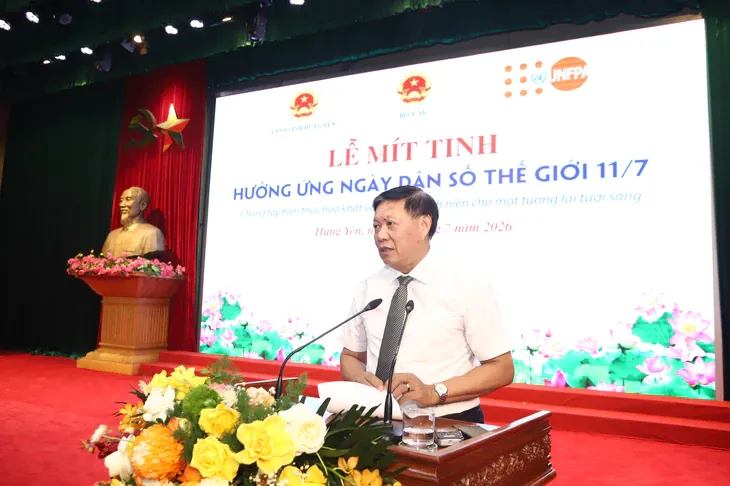
The event was attended by Mr. Do Xuan Tuyen, Deputy Minister of Health; Mr. Le Quang Hoa, Vice Chairman of the Hung Yen Provincial People's Committee; Ms. Pauline Tamesis, United Nations Resident Coordinator in Viet Nam; Mr. Matt Jackson, UNFPA Representative in Viet Nam; representatives from several foreign embassies; leaders of central ministries, agencies, and mass organizations; as well as representatives of relevant departments and agencies of Hung Yen Province.
Speaking at the event, Deputy Minister of Health Do Xuan Tuyen emphasized that, in terms of population policy, Viet Nam has consistently regarded "population as a top priority in the cause of national construction, development, and protection."
This viewpoint is reflected in Resolution No. 21-NQ/TW dated October 25, 2017, adopted at the Sixth Plenary Session of the 12th Party Central Committee on population work in the new context, as well as the Population Law No. 113/2025/QH15.
According to the Deputy Minister, this year's World Population Day theme conveys a clear message: placing young people at the center of development by ensuring they have access to education, healthcare, comprehensive development opportunities, and the ability to actively pursue their aspirations.
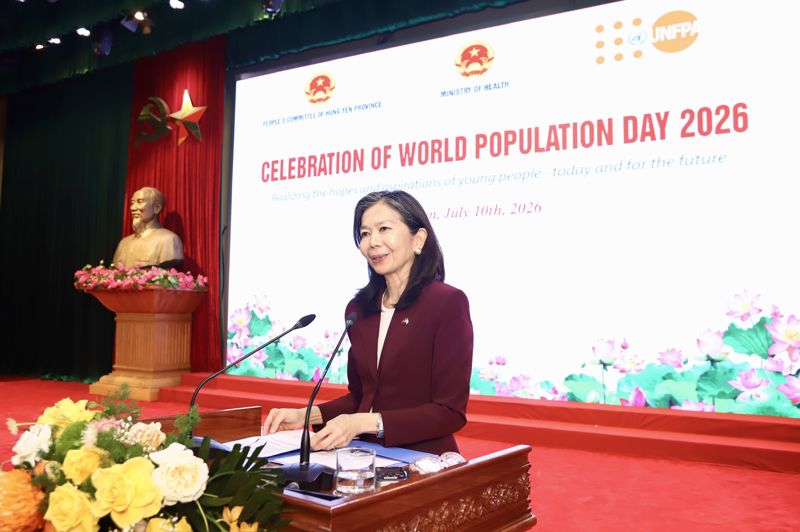
At the event, the United Nations Resident Coordinator in Viet Nam and the UNFPA Representative in Viet Nam reaffirmed the central role of people - particularly young people - in achieving sustainable development. With nearly 70 million people aged 15 - 64, Viet Nam is currently benefiting from its demographic dividend, presenting a significant opportunity for the country to enter a new era of growth and national advancement.
At the ceremony, delegates noted that the world is entering a period of significant demographic transformation, bringing both opportunities and challenges for the sustainable development of nations.
According to the United Nations World Youth Report 2026, there are currently approximately 1.3 billion young people aged 15–24 worldwide - the highest number in human history. Of these, nearly 760 million live in low- and lower-middle-income countries.
However, the proportion of young people in the global population is declining rapidly. While those aged 15 - 24 accounted for 17.8% of the world's population in 2000, the figure fell to 15.6% in 2025 and is projected to decline further to 13.3% by 2050.
Several Asian countries, including Japan, the Republic of Korea, and China, are experiencing rapid population ageing alongside a steadily shrinking youth population.
At the same time, the world continues to face pressing challenges related to sexual and reproductive health, particularly among adolescents and young people.
Currently, nearly one in five women aged 20 - 24 worldwide were married or in a union before the age of 18. Each year, millions of adolescent girls become pregnant and give birth, especially in low-income countries.
According to United Nations statistics, more than one million new sexually transmitted infections (STIs) are recorded every day worldwide, with young people among the groups at the highest risk.
These figures demonstrate that investing in young people is not only the responsibility of individual countries but also a global imperative.

Over the past three decades, Viet Nam has achieved significant progress in population and development. Population quality has steadily improved, life expectancy has increased, maternal and child mortality rates have declined substantially, and malnutrition has been markedly reduced.
These achievements have made important contributions to economic growth, enhanced the quality of the workforce, promoted gender equality, and supported the achievement of multiple Sustainable Development Goals (SDGs).
By early 2026, Viet Nam's population had surpassed 102 million. The country is currently experiencing its demographic dividend, with approximately 67.4% of the population being of working age, providing a strong foundation for socio-economic development.
This period is widely regarded as a "golden opportunity" for Viet Nam to accelerate its development and achieve its goal of becoming a high-income developed country by 2045.
However, Viet Nam is also facing a number of emerging challenges. Persistently low fertility rates may lead to future labour shortages, while population ageing is progressing rapidly. At the same time, the sex ratio at birth remains significantly above the natural balance.
In addition, child marriage and adolescent pregnancy continue to exist in certain localities, particularly in ethnic minority communities. Although the height, physical fitness, and overall quality of the young workforce have improved, they have yet to meet expectations.
Without timely and effective solutions, these challenges could have a direct impact on the country's population quality and national competitiveness in the years ahead.
Investing in Young people is investing in the Nation’s future
According to the National Transfer Accounts (NTA) Report, jointly developed by the General Statistics Office of Viet Nam and the United Nations Population Fund (UNFPA), Viet Nam is entering a critical phase of transitioning its growth model - from one driven by low-cost labour to one powered by productivity, innovation, and a high-quality workforce.
This transformation requires young people to be placed at the heart of development policies. A healthy, well-educated, empowered, and opportunity-rich young generation will serve as a powerful catalyst for economic growth, innovation, and social progress. This is also the core message of World Population Day 2026.
In recent years, Viet Nam has continued to strengthen its population policy framework. The National Assembly has adopted the Population Law and approved the investment policy for the National Target Program on Health Care, Population and Development (2026 - 2035).
At the same time, implementing decrees and circulars under the Population Law, along with national programs and action plans on improving population quality, adapting to population ageing, developing human resources, and strengthening reproductive healthcare, are being rolled out nationwide.
Deputy Minister Do Xuan Tuyen also noted that 2026 marks the 65th anniversary of Viet Nam's population program. Over the past six and a half decades, generations of population professionals have made significant contributions to the country's socio-economic development and to improving the quality of life for its people.

Turning Young people's aspirations into Reality in a New era
In the cause of national development and safeguarding the country, today's young people are the driving force behind innovation, digital transformation, green growth, and the building of a modern and progressive society. President Ho Chi Minh once affirmed:
"The youth are the future masters of the country. Whether the nation prospers or declines, grows strong or remains weak, depends largely on its young people."
Today, as Viet Nam enters a new stage of development with the aspiration of becoming a modern, developed, prosperous, democratic, equitable, and civilized nation by the middle of the 21st century, young people are expected to further demonstrate their pioneering role by transforming their aspirations into concrete actions and contributing to the realization of the Party's and the nation's long-term vision.
The Party and the State continue to provide support through mechanisms and policies that empower young people to pursue their aspirations and contribute to Viet Nam's development in this new era.
As the country advances through digital transformation, innovation, and deeper international integration, the role of young people becomes increasingly significant.
The Ministry of Health will continue working closely with ministries, sectors, local authorities, and international organizations to effectively implement the Population Law, strengthen reproductive healthcare programs, improve population quality, and promote youth development.
Through these collective efforts, Viet Nam aims to foster a generation of healthy, knowledgeable, skilled, and empowered young people with the aspiration to contribute, equipped to drive the country's rapid and sustainable development in the new era.
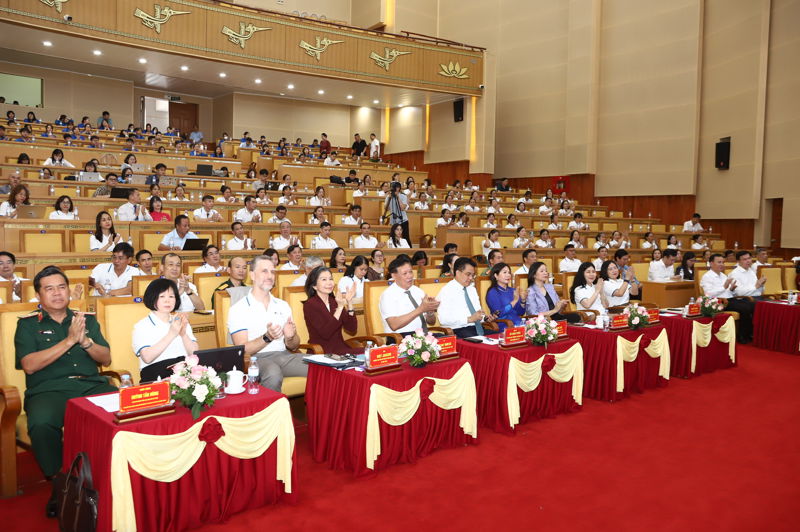
Source: Sức Khỏe & Đời Sống